2026 Winners Gallery
Daniel Viñé Garcia, Spain
Daniel Viñé Garcia, Spain
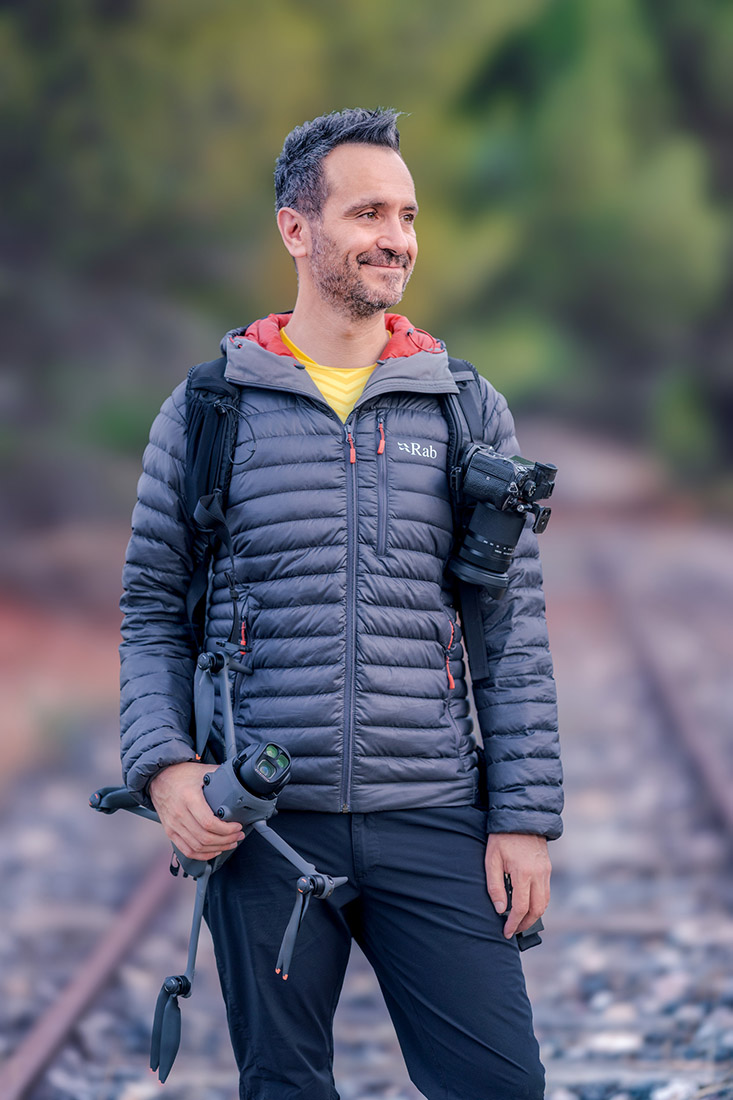
Daniel Viñé is a landscape and aerial photographer based in Spain. For more than fifteen years, photography has been his way of exploring the world, driven by a fascination with extraordinary landscapes, remote places, and fleeting light capable of completely transforming a scene. Although he first began taking photographs in 2005, his journeys to Iceland and the western United States in 2015 marked a turning point. Since then, travel and photography have become inseparable: photography no longer simply accompanies the journey — very often, it determines where the next one will take him.
This search has taken him to places as diverse as Namibia, the Moroccan desert, the Canadian Rockies, the American Southwest, and some of South America’s most extreme landscapes, from the Bolivian Altiplano to the Argentine Puna and northern Chile. Vietnam and Turkey have also inspired another side of his work: a fascination with people, their traditions, and ways of life closely connected to the land.
Panoramic photography has always been central to his visual approach, first with a camera and later from the air. The drone expanded this even further: moving only a few metres can completely transform a landscape, revealing entirely new compositions.
His work has received international recognition in competitions including the International Aerial Photographer of the Year, World Photographic Cup, Milky Way Photographer of the Year, Drone Photo Awards, Memorial María Luisa, and DJI SkyPixel Photo Contest, among others.
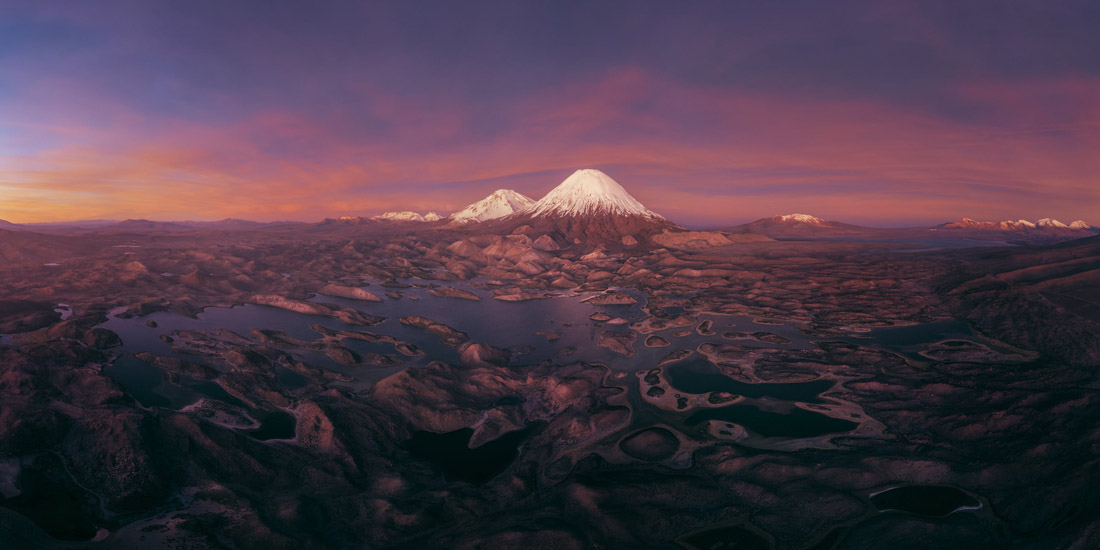
Parinacota Volcano was one of the main photographic goals of my trip to Chile. Rising to more than 6,300 metres, its distinctive snow-covered cone has an almost perfect symmetry that immediately reminded me of volcanoes such as Mount Fuji. Beside it stands Pomerape, another giant reaching more than 6,200 metres, together forming one of the most impressive landscapes I encountered during the journey.
After allowing time for proper acclimatisation, I spent three days and three nights at around 4,500 metres above sea level, giving myself the best possible chance of photographing the area under ideal conditions.
This image was captured during the final moments of sunset. After one last burst of light, the landscape gradually took on magenta tones, wrapping the volcanoes and the high-altitude lakes in a particularly special atmosphere.
The original capture was a 360-degree aerial panorama made from 33 individual exposures. I later refined the framing from the full panorama to concentrate the final composition on the volcanoes, the light, and the shapes of the landscape.
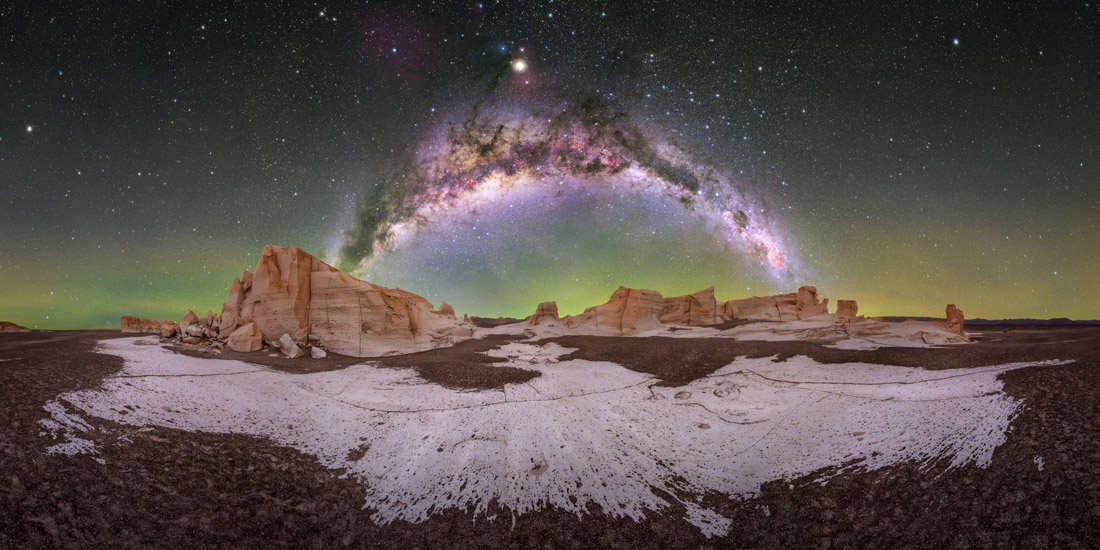
After several days travelling along dirt roads through the Argentine Puna, we reached this remote part of the Andean Altiplano: a vast landscape of white pumice formations sculpted by the wind. The area is so immense, uniform and isolated that it is surprisingly easy to lose your sense of direction while exploring it.
While walking through the area, I found this particular spot, where the pumice formations and pale ground perfectly reflected the almost surreal character of the landscape. As I worked on the composition, I also noticed a shape in the terrain that reminded me of a large prehistoric bird, adding even more to the otherworldly feeling of the scene.
At around 3,100 metres above sea level, beneath a sky almost completely free from light pollution, the night sky was spectacular. I waited until late into the night, when the Galactic Centre had climbed higher above the horizon and the Milky Way formed a huge arc across the landscape.
When we finally started driving back to our accommodation in El Peñón, we came across the police: they were looking for us. The owner of our accommodation had become worried when we had not returned and thought we might have got lost or become stuck somewhere with the 4×4. We had told her we would be back late… although I suppose she had not imagined quite how late.
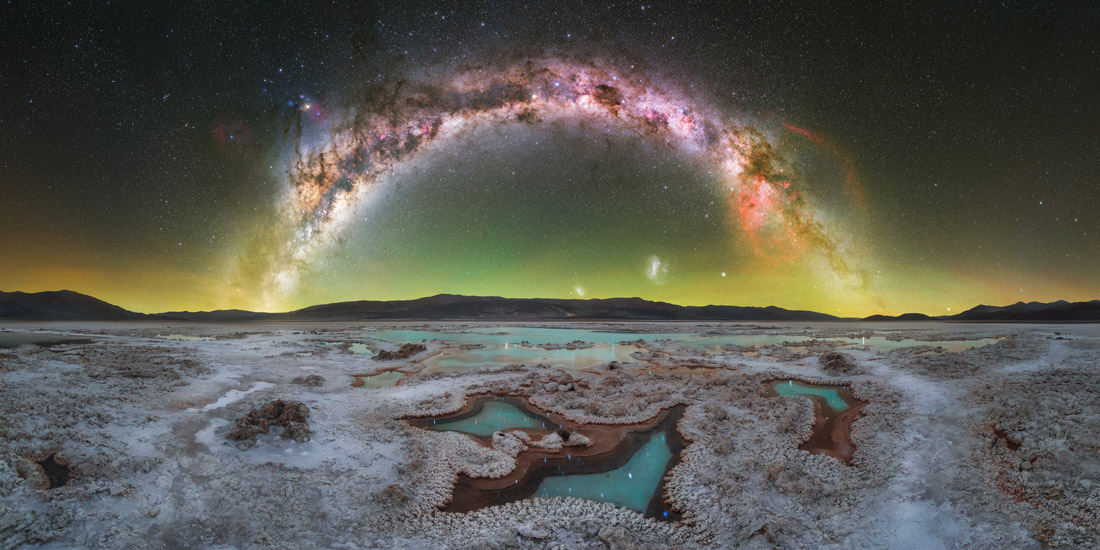
During our expedition through the Argentine Puna, after several days travelling deeper into this remote part of the Andean Altiplano, we reached a salt flat in the province of Catamarca, more than 3,300 metres above sea level. Its small, colourful pools broke up the vast white expanse and gave the landscape an almost otherworldly appearance.
The nearest settlement, Antofalla, is a tiny community of only a few dozen people, located several hours from any other populated area. Electricity is supplied by a generator that is switched off during the night, leaving this part of the Puna in almost complete darkness.
The southern sky offered a particularly striking composition: at one end of the Milky Way arc was the bright Galactic Centre, while at the opposite end stretched the enormous Gum Nebula, one of the great structures of the southern sky. It is a view of the Milky Way very different from the one we are used to seeing from the Northern Hemisphere.
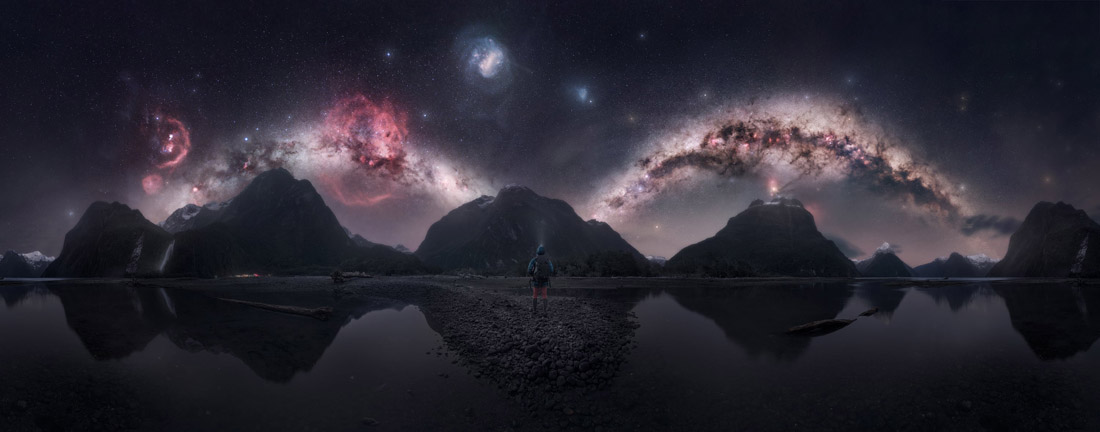
This is what I consider an almost impossible photo because you need some very specific conditions to pull it out. Milford Sound is a place where it rains (on average) 300 days a year. In fact, the day before I visited, the access road was closed due to snow avalanche danger. I ventured there without any expectations, with the sole intention of enjoying the place, aware of the improbability of the task. It is very difficult to have an entire clear night with no rain, no clouds, no moon, and for all of this to coincide at the end of September when it is possible to capture the double arc of the Milky Way. But I thought what if…
I don’t think I can put into words the luck and chain of coincidences that had to come together to capture this photo. I still remember feeling excited under the stars, aware of what I was witnessing. It is a unique photo, one that I have not seen anywhere else and that I think would be very difficult for anyone else to replicate.
It is also a very complex photo that requires a lot of work, both in terms of capturing and editing. The sky is composed of two separate tracked panoramas, each comprising eight panels, with each panel in turn consisting of a stack of four 45-second exposures. The first panorama is taken after sunset to capture the spiral arm containing the galactic core. The second contains both Magellanic Clouds, Gum, and the Orion Nebula, captured between 2 and 4 am. It is important to time the shots so that both panoramas are at approximately at the same height above the horizon. Finally, the ground needs to be captured for which the moving tides need to be considered. For this foreground I used a 14-panel 360º panorama, where each panel is created from a bracketing of three photographs, plus an additional photograph to include myself. The final image is therefore the result of combining 107 different photographs.
The final results is what I consider to be a pretty unique image that shows the dream team of the wide angle astrophotography. Everything you want to see on an astrolandscape night sky shot is there, so I hope you enjoy it as much as I do.
That sunset felt like a farewell, the last blaze of light closing with “fireworks” one of the most meaningful journeys I’ve ever taken.
My name is Mikel and I am landscape and astrophotographer that enjoys his endeavour to photography. I am based on the Basque Country, in the north of Spain, which is a place I love deeply although I spend as much time as I can exploring the world. Photography is the tool I use most to express my curiosity about the unknown, be it new cultures, remote places or space. My journey into the world of photography has been a gradual one. For many years now, a camera has been my most faithful travelling companion, with no other aim than to satisfy my curiosity. I think the trip that motivated me to take this a bit more seriously was the one I took to Japan in 2017. I realised that photography allowed me to experience reality in a different way to what I’d known until then; arriving at places before anyone else and staying behind when everyone else has gone allows you to train your eye to see things that others don’t see. I really love that feeling. And probably the trip that has had the greatest impact on my life, for many reasons, was my stay in the Peruvian Andes. That’s where I confirmed my passion for photographing the night sky, a passion that has only grown over time.
The other aspect of my photographic work is the part that begins when I get home and put my camera aside. I really enjoy editing my photographs, and it’s something to which I devote a fair amount of time and attention. The skills I’ve acquired over time have allowed me to feel comfortable with workflows ranging from single exposures to multi-row tracked night panoramas. I spend a great deal of time ensuring that I can control the colour, lighting and detail of a photograph so that it does justice to how I remember it. I love going back to old photographs and smiling as I delve into the fond memories they bring back.
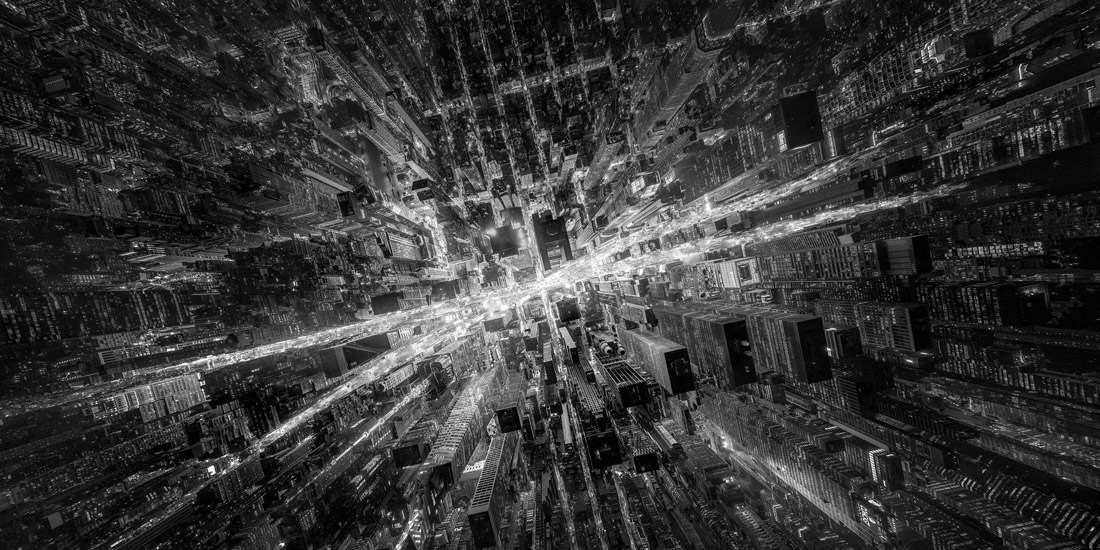
Times Square is one of the most photographed places in the world, so my challenge was to find a perspective that could make such a familiar place feel unfamiliar again. From above, the dense architecture, streets, and illuminated billboards seem to radiate around the square.
I stitched together 25 frames to create an ultra-wide aerial panorama, revealing the scale and density of the skyscrapers surrounding Times Square. I wanted the panorama to immerse the viewer in the vast expanse of the city, with countless points of light resembling stars surrounding the centre of a galaxy.
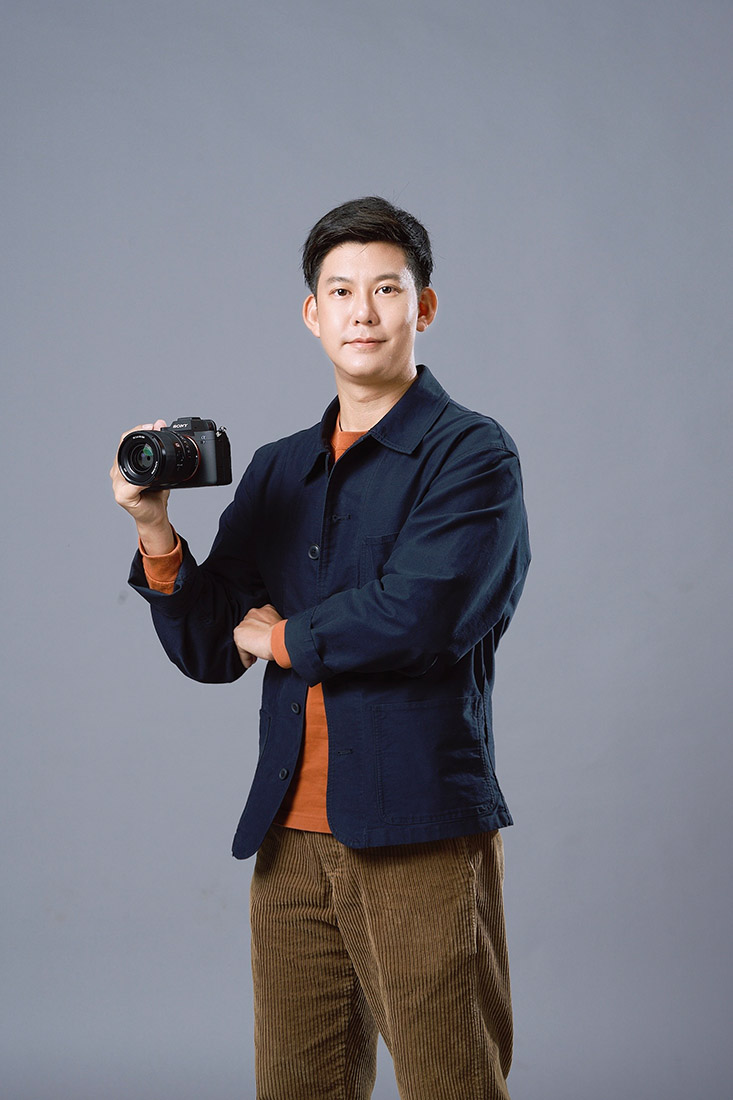
Xuecheng Liu is a photographer whose work focuses on landscape, wildlife, and architecture. He began exploring photography in 2021, shortly after starting university, and has since developed a particular interest in discovering both familiar and unfamiliar scenes from different perspectives.
His photography has received international recognition, including winning the Sony World Photography Awards and Weibo Landscape Photographer of the Year. He seeks to uncover the hidden connection between the world as it is and the world as he imagines it. Photography has become his simple yet powerful interpretation of nature.
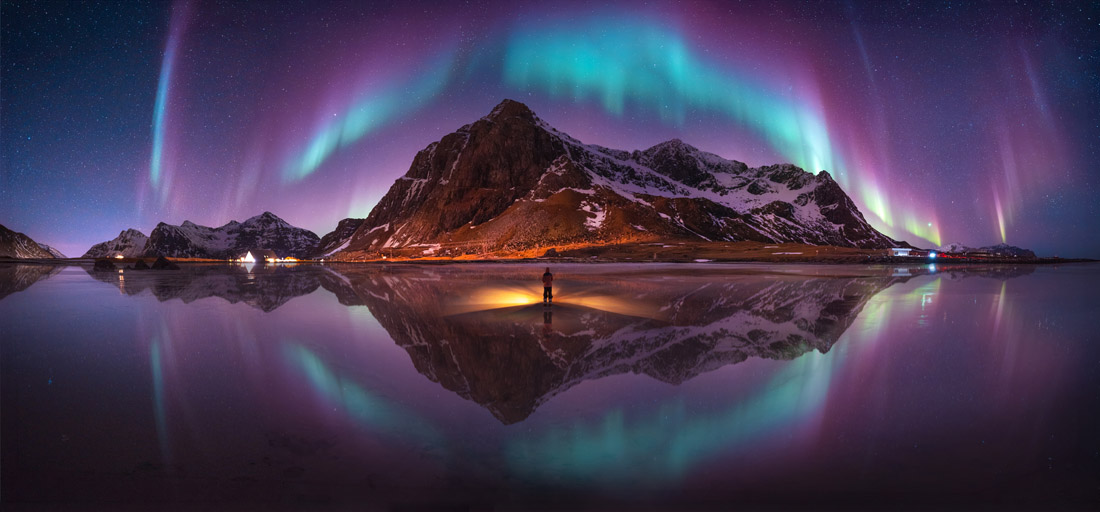
This photograph came to life as the Northern Lights flared up and curved perfectly around the mountain. The display was so vastly immense that even my 12mm ultra-wide lens couldn’t capture the entire scene in a single frame. My only choice was to shoot a panorama. It wasn’t until I stitched the frames together that I realized the aurora had formed a flawless, complete arch framing the peak. Standing on the wet beach, the calm shore provided a mirror-like reflection of the entire celestial phenomenon.
The conditions that night were brutal—freezing cold, biting winds, and I had to wade into the icy seawater to get the shot. Given all the challenges faced in those harsh elements, bringing this vision to reality is something I am truly proud of.
Wutimet Bunyasirisith is a Bangkok-based landscape, fine art, and travel photographer, as well as a digital content creator behind the travel brand Lazy Coup. With a passion for capturing the raw beauty of nature and distant horizons, he specializes in high-resolution panoramic and aerial photography. His work aims to convey the scale, drama, and quiet poetry of the natural world, taking viewers on visual journeys across stunning global landscapes.
Hattori Tai, Regional Director of Commercial and Industrial Inkjet Products, Epson Southeast Asia said: “We are thrilled to celebrate the exceptional talent emerging from Southeast Asia for the third year running. Wutimet’s success reflects a continuing trend of Southeast Asian photographers venturing to distant global landscapes to capture back awe-inspiring, world-class panoramic visuals. His work has shown us relentless passion, vision and technical discipline that define our region’s creative community. Epson is honoured to support our region’s best visual storytellers with world-class print solutions that preserve the depth, scale and rich colour of their photography.”
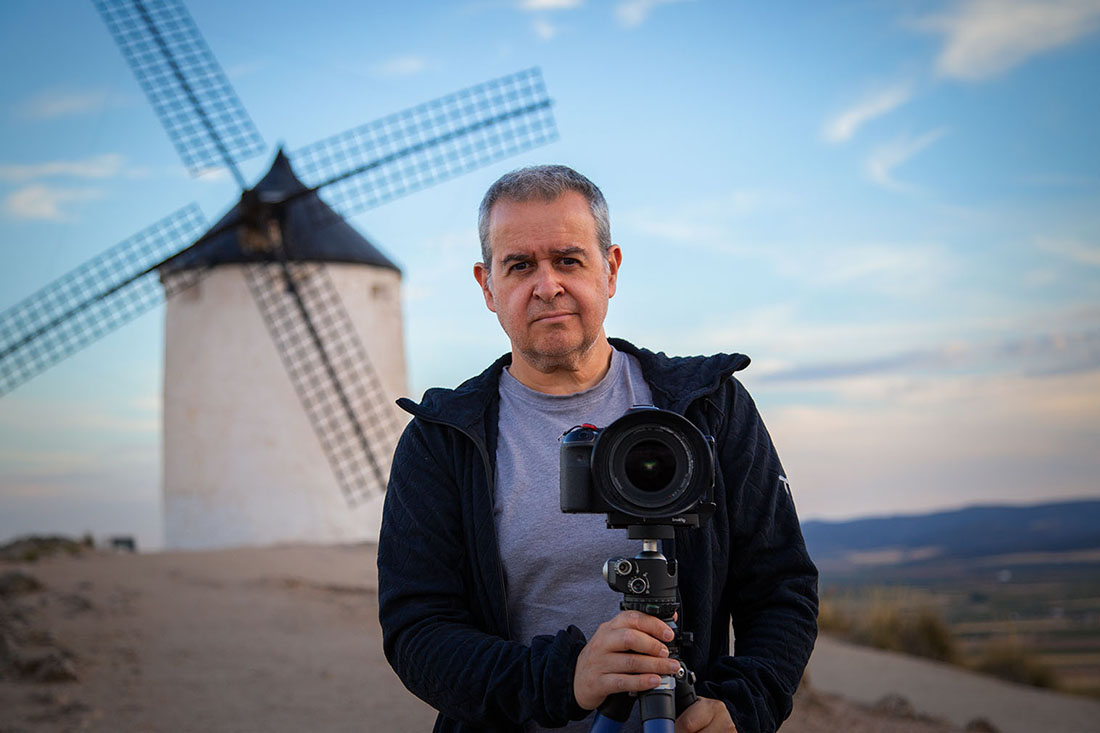
My name is Tomás Sánchez Ruiz and I am an amateur photographer born in Madrid, Spain. Although photography had always sparked my curiosity — perhaps because there were always cameras around my parents’ home — it was not until a little over 15 years ago that it became a fundamental part of my life, through night photography. For years, landscapes beneath the stars were my main source of inspiration. Over time, and thanks to another of my great passions, travelling, I also discovered the pleasure of photographing landscapes at any time of day. Photography and travel have thus become two complementary ways of discovering the world and of trying to preserve, through my camera, those places and moments that move me.
Although I have gradually explored other disciplines, such as architectural and aerial photography, I still feel most at home photographing landscapes at night. Few experiences can compare to witnessing an aurora borealis or the Milky Way beneath a sky free from light pollution, and having the opportunity to turn that moment into an image that allows me to return to it.
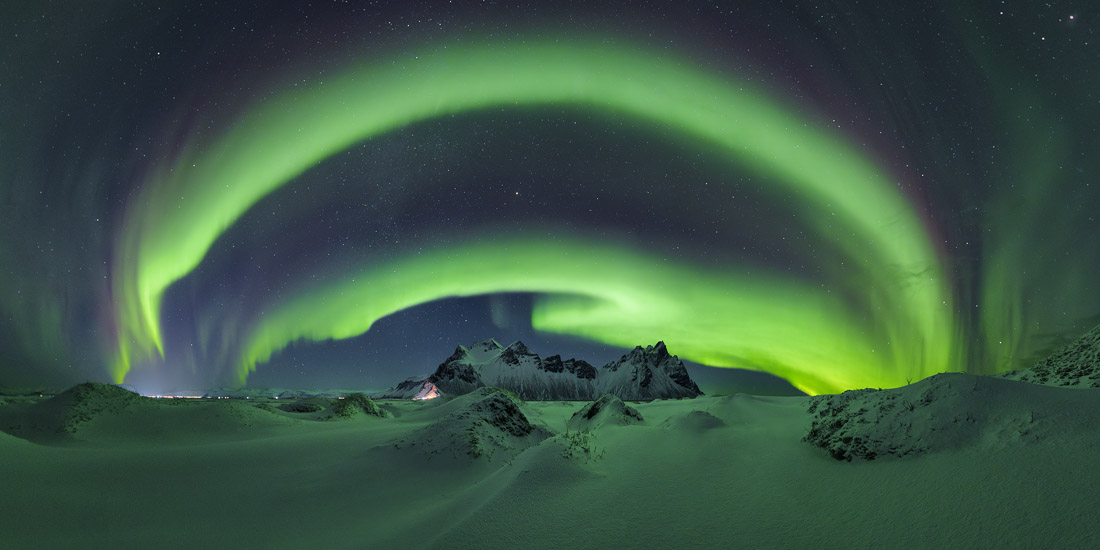
On the night I took this photograph, the aurora forecast was not particularly promising. The skies were clear, but the chances of seeing the Northern Lights were low.
However, when I pulled back the curtain of our hotel room and saw a green glow in the sky, I knew this could be the night we had been waiting for. We quickly left the room and headed to Stokksnes.
When I arrived, I found a landscape I had never encountered on my previous visits: the black sand was completely covered in freshly fallen, untouched snow. I grabbed my camera and tripod and walked out into the snow, looking for a composition that would frame Vestrahorn beneath the spectacular aurora already dancing above its peaks.
And there I was, finally taking the photograph I had been waiting for, with a smile on my face. A smile that still appears whenever I remember that night.
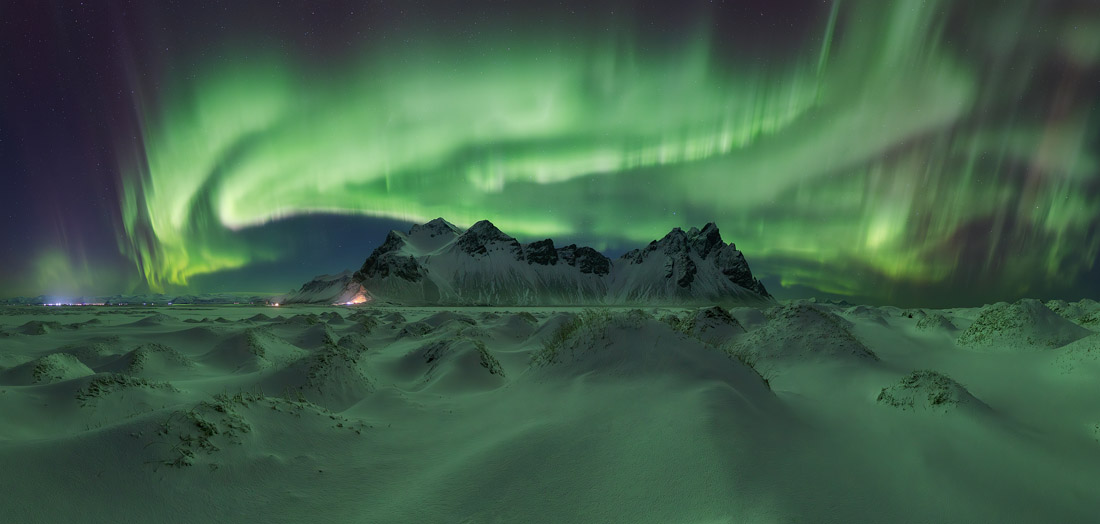
During my first trip to Iceland in 2015, I had the opportunity to visit the famous Vestrahorn mountains in the southeast of the island. Although I had already seen them in photographs, seeing them in person for the first time left a deep impression on me.
Over the past ten years, I have returned to Iceland several times, and I have visited Stokksnes and Vestrahorn on almost every trip. I have photographed them at sunrise, at sunset and, of course, at night, hoping to see the Northern Lights dancing above their peaks. I had never been lucky enough to see them there, at least not in the way I had dreamed of.
Until that January night. For more than two hours, the aurora danced above Vestrahorn. After so many years of waiting, this time I was there.
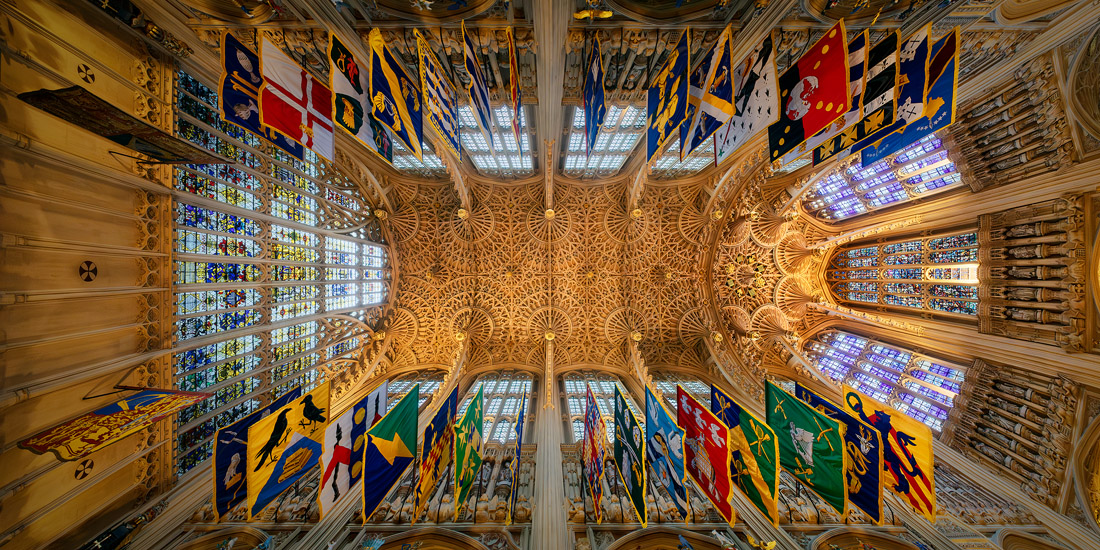
In December 2023, during a several-day trip to London, I had the opportunity to visit Westminster Abbey. Although I had visited the city before, I had never made what I considered an almost obligatory visit. I knew its interior would be impressive and that I would thoroughly enjoy it, but I had no idea that this architectural masterpiece contained another hidden gem: the Henry VII Chapel, also known as the Lady Chapel.
As soon as I entered the chapel and saw its enormous stained-glass windows, the spectacular ribs of the vaulted ceiling and the flags lining both sides of the room, I knew I had to get my camera out. I positioned myself as centrally as possible and began taking a series of overlapping photographs, covering the vaulted ceiling from one end to the other, with the intention of later stitching them together into a single panorama that would capture the grandeur of the entire space.
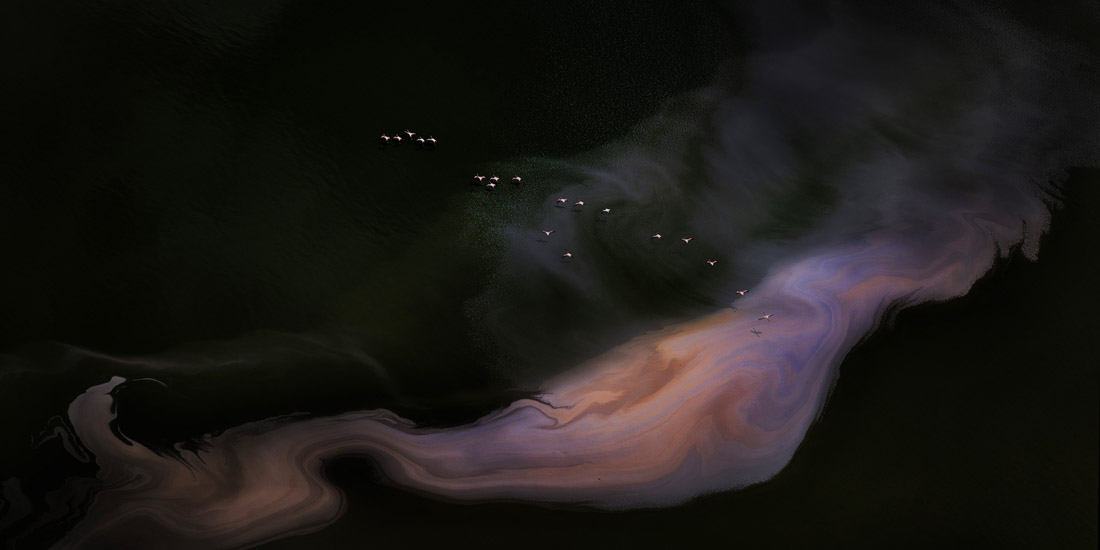
In March 2024, I returned to Lake Magadi in Kenya, just in time for the quick transition from the rainy season to the dry season. As the freshwater evaporated, the proportion of the lake water increased, and chemical deposits on the lakebed were exposed, forming lots of interconnected patterns. These patterns usually only last a few days. With the arrival of the dry season, vast areas of the lake, only a few dozen centimeters deep, turned into dry riverbeds. I was lucky to catch this moment, and a flock of flamingos flew in, adding life and bringing a dreamy, magical scene from the sky.
Xuejun Long is a wildlife photographer from China. Her photography has been showcased internationally multiple times, including at Xposure, PX3, TIFA, Fine Art Photography Awards, and MONOVISIONS Photography Awards, and she has received recognition as Photographer of the Year in several major awards.
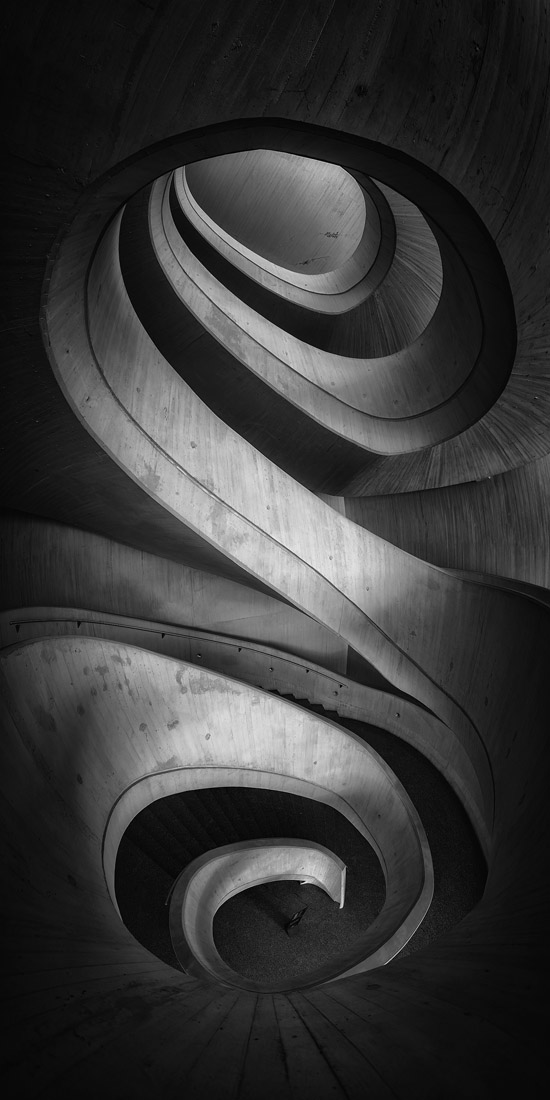
This photograph was taken in 2026 at the Reina Sofía Palace of the Arts, in the City of Arts and Sciences in Valencia. It’s a moment I’ll always remember, as it was the first time l’d ever been inside. Once inside the building, I found myself faced with a vast expanse of concrete, textures and lines, and was confronted with the challenge of creating what, for me, is an optical illusion. To achieve this, I used a wide-angle lens and created a
composite image from eight shots, aiming for the curved lines of the staircase to guide the eye from the ground towards the sky. The result is a double ‘S’-shaped spiral which, in my opinion, lends dynamism and depth to the image and creates a different perspective on this space. I believe the Reina Sofía Palace of the Arts is a magnificent place to practise and enjoy architectural photography; it offers endless possibilities for experimenting
with composition and perspective.
I’m a photographer with a passion for travel, nature and architecture, known on Instagram as #basebase. Through my lens, I seek to discover different perspectives, the beauty of small details and to convey emotions in every image with a personal touch. To achieve this, I play with lines, light and shadow. Architectural photography holds a special place in my work, particularly because of the opportunities it offers to experiment with composition and discover the beauty of structures and spaces. Competitions such as the Epson Pano Awards motivate me to develop my skills in this discipline. Travel is also a fundamental part of my inspiration. Every journey represents an opportunity to discover new settings and tell stories through images. For me, every image is an opportunity to savour the sensations that each moment and each place offers me. Through my account, I share my projects and experiences, showcasing my development. My aim is to continue learning and to turn every photograph into a unique experience.
Cenote El Edén is known for its natural curtains of light. Deep inside the cavern lies a narrow chamber where sunlight cuts through the water, framing the scene.
Capturing this 360° panorama took a great deal of care. In such a tight space with clear water and a delicate clay floor, the greatest challenge was maneuvering and rotating the camera without letting the gear or fins brush against the rocks, which would instantly stir up sediment and ruin the shot. Positioning the flashes was key to revealing the cave’s textures and properly lighting the diver, avoiding a dark silhouette against the light. The model made all the difference by staying steady and motionless just inches above the bottom, without disturbing the silt
Marcio Cabral is one of Brazil’s leading nature and landscape photographers, with over two decades dedicated to documenting remote ecosystems across the globe. His imagery has been widely awarded in prestigious international competitions, featured in landmark publications such as National Geographic’s Icons and Netflix’s Our Planet, exhibited in renowned museums including the Smithsonian and the Gasometer, and selected for major corporate campaigns.
A pioneer in underwater panoramic photography, he is the current Guinness World Records title holder for the world’s largest underwater panorama. Marcio is also a specialist in panoramic imaging, particularly in virtual reality (VR 360°), merging technical precision and artistic vision to immerse viewers directly into the planet’s most pristine and inaccessible environments.
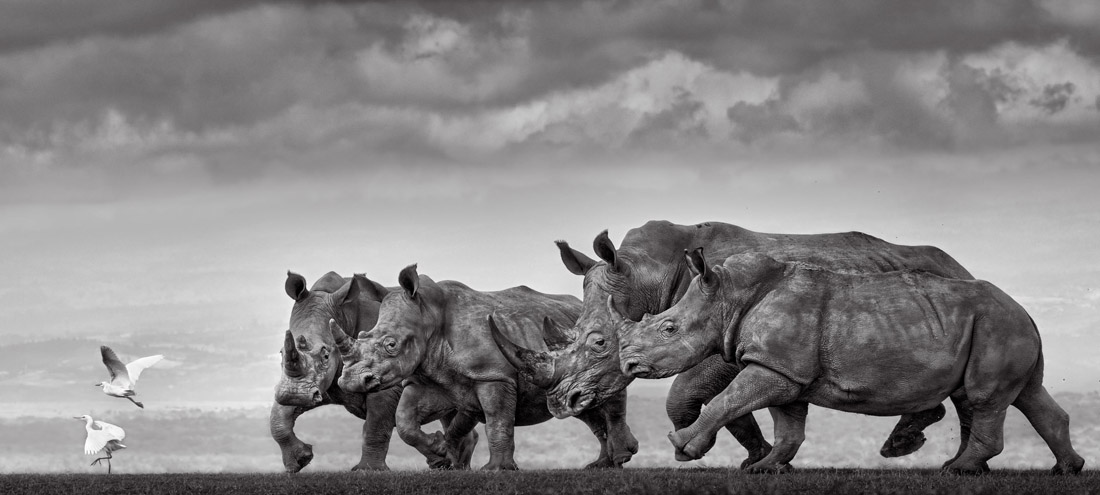
Southern white rhinos are, in their normal state, are surprisingly unthreatening – calm grazers who move around at a leisurely pace. One morning at Solio Game Reserve in Kenya we were photographing a group of 8 rhinos with a few cattle egrets walking among them, a rare sighting in most other national parks. Something suddenly shifted and five of the rhinos broke into a run. We understood in that instant why a group of rhinos is called a crash. Neither of us has ever played rugby, but from the point of view of the egrets this is how we imagine a forward pack must look, heads down and all that weight already committed. Thankfully the egrets took to the air and got out of the way with barely a moment to spare. Seeing these many rhinos together is already rare and seeing them run together at another species is rarer still. At Solio Game Reserve, where Kenya’s rhino population has been painstakingly rebuilt without any de-horning even an accidental moment of chaos feels like a miracle.
Preeti and Prashant are an Indian wildlife photographer couple based in Dubai. They work together as @composingthewild. They view the natural world as a canvas for emotion, narrative and art, not just as a subject to be documented. Their work moves beyond the conventional bounds of wildlife photography, focusing not on species checklists or iconic sightings, but on moments – fleeting, unstaged, and alive with meaning. They seek the timeless and the evocative, often using monochrome tones to strip away distraction to reveal the essence of a moment. It is their ambition that their work will help to restore the connection between nature and humans.
The Epson Digital Art Prize is decided by the executive team at Epson Australia from the top 50 entries in each category of the Open competition. The entries must show excellence in digital post processing as well as exceptional photographic technique
Epson Australia MD, Craig Heckenberg, said,
Photographers at every level, from first-time entrants to established professionals, use the Pano Awards as a benchmark for their own work. The aerial category is a perfect example of why the competition has stayed relevant for 17 years. It responds to what photographers are actually doing and it gives the global industry a view of where the craft is heading next.
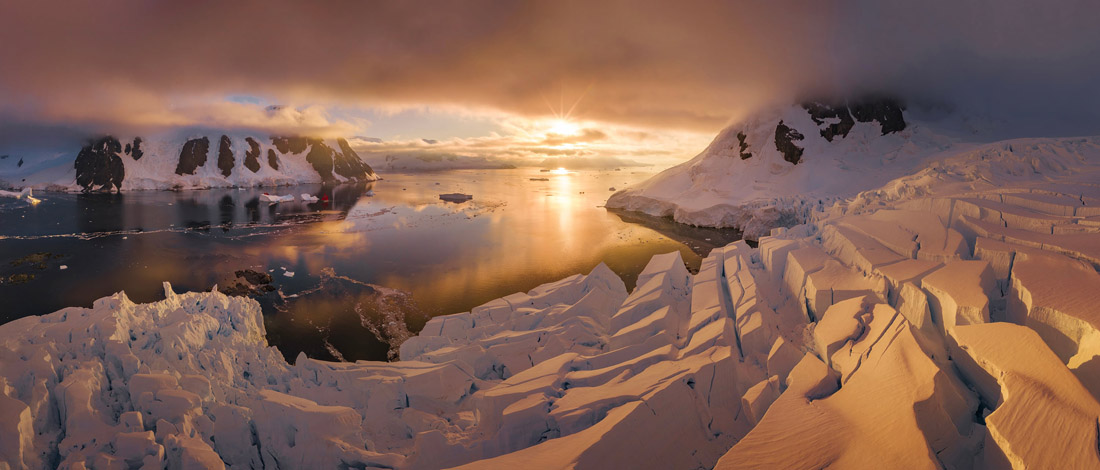
Last January, on an evening down south at the Antarctic Peninsula, I was with a group of photographers divided over two sailing ships exploring the southern continent. It was my first time there and the whole experience was truly magical. We had a special license to fly our drones and this gave me the chance to capture unique shots of the best landscapes that Antarctica has to offer. On this particular night the light was really amazing with some low clouds and vibrant golden light. The glaciers in Antarctica often have rectangular shaped structures as seen on my panorama. If you look well you can also spot our two sailing ships with the red sails up in the distance. As it never becomes dark in the Antarctic summer this whole night was such a spectacle. The sunset slowly faded into the sunrise, so it went from golden hour to blue hour to golden hour again. Our ships were also surrounded by humpback whales and penguins which made this moment truly breathtaking. I remember I only slept for like an hour, but the lack of sleep was definitely worth it.
I am Max Terwindt, a passionate photographer specialised in dramatic and colorful landscapes. I am from The Netherlands, which is also my home, but often abroad doing what I love the most: capturing the amazing beauty of our planet. I have an educational background in the field of sustainability and love to be creative to the fullest extend with both camera and drone. I hope to increase the connection of people with nature and create more awareness. I am also guiding photography enthusiasts on beautiful locations around the world during my photo tours. I feel truly honoured that I can show people the amazing beauty of our planet as my job.
Parinacota Volcano was one of the main photographic goals of my trip to Chile. Rising to more than 6,300 metres, its distinctive snow-covered cone has an almost perfect symmetry that immediately reminded me of volcanoes such as Mount Fuji. Beside it stands Pomerape, another giant reaching more than 6,200 metres, together forming one of the most impressive landscapes I encountered during the journey.
After allowing time for proper acclimatisation, I spent three days and three nights at around 4,500 metres above sea level, giving myself the best possible chance of photographing the area under ideal conditions.
This image was captured during the final moments of sunset. After one last burst of light, the landscape gradually took on magenta tones, wrapping the volcanoes and the high-altitude lakes in a particularly special atmosphere.
The original capture was a 360-degree aerial panorama made from 33 individual exposures. I later refined the framing from the full panorama to concentrate the final composition on the volcanoes, the light, and the shapes of the landscape.
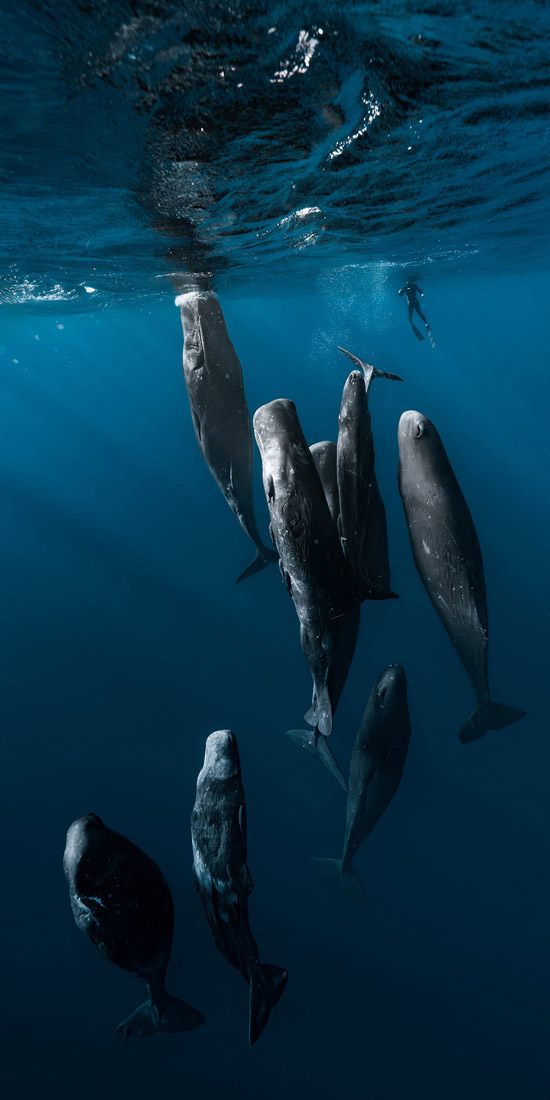
Between Giants, Indian Ocean, Mauritius
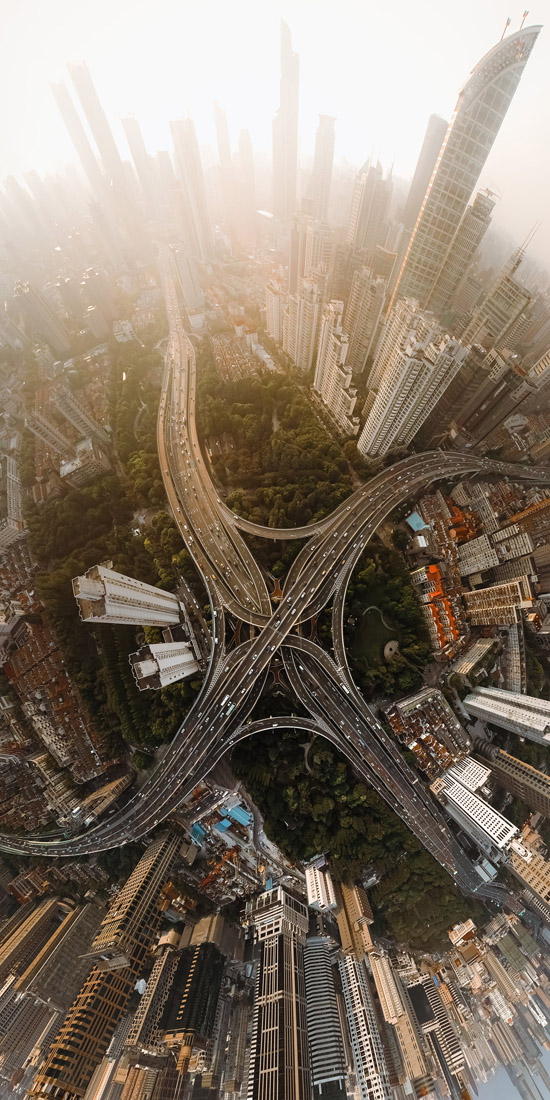
X marks the spot in Shanghai, Yan an elevated road, Shanghai, China
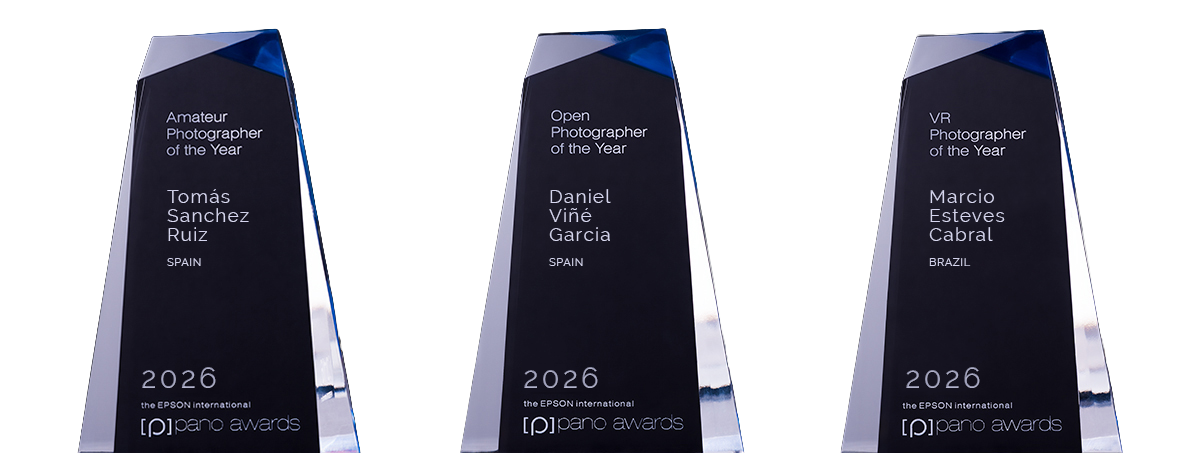

Since 2010, The Epson International Pano Awards has been dedicated to the craft and art of panoramic photography, and is the world’s largest competition devoted to the genre. Our aim is to give the genre of panoramic photography its day in the sun, especially via the showcase of winning and top-scoring entries to media around the world.